
No SSR rewrite
Keep the SPA and framework you already use. You do not need to add server-rendering code to your app.
 Spache
Keep your stack. Add server-rendered pages.
We spent zero seconds making this crawlable, you still found us. This site is a plain JS SPA. Spache serves its rendered HTML to you and to crawlers.
Try Spache on your site
We’ll render your public homepage once, show you the result, and estimate 100, 1,000, and 10,000 renders a month.
Vanilla JavaScript, React, Vue, Angular, Svelte - anything that runs in a browser.
New framework invented tomorrow? Already works in Spache!
Search engines receive rendered page content instead of an empty app shell. Visitors can start reading that content while your app bundle loads and starts. Spache handles rendering and cache refresh; your SPA still handles interaction.
Keep the SPA and framework you already use. You do not need to add server-rendering code to your app.
Spache renders routes, stores the HTML, and serves it. You do not need a separate build and deploy step for generated pages.
Use a preview URL to check rendered routes and errors. Connect your domain when the pages look right.
A real site, before and after Spache
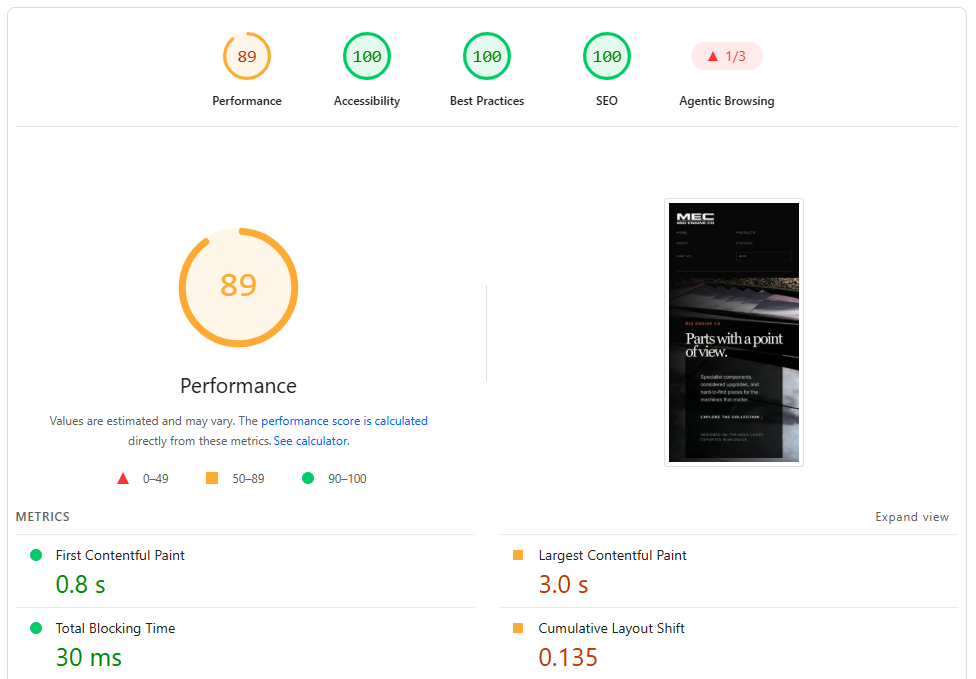
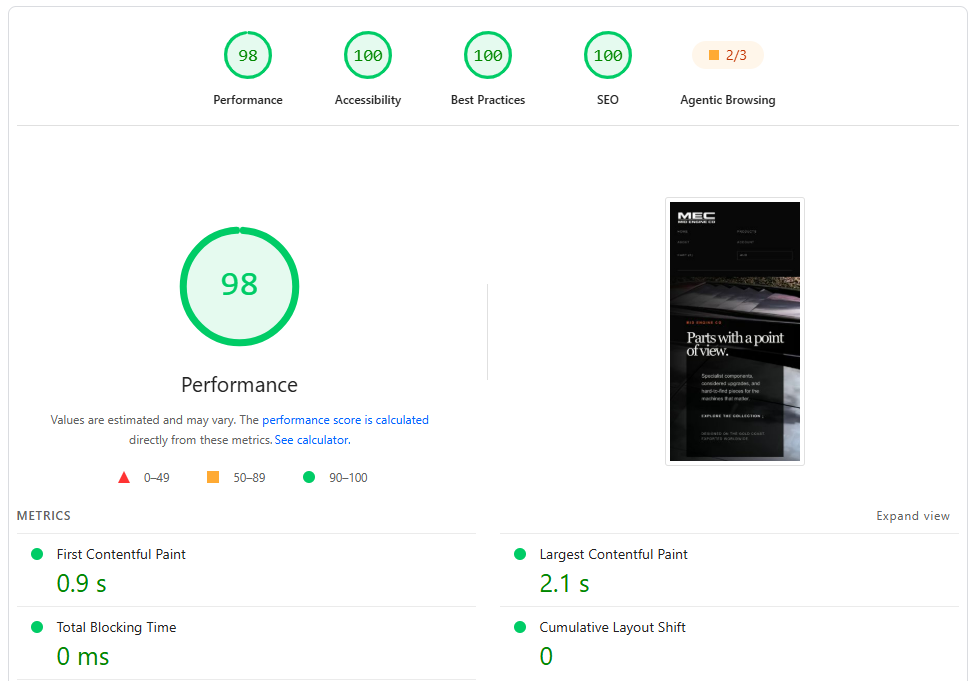
On Mid Engine Co, the Lighthouse performance score went from 89 to 98, while Largest Contentful Paint improved from 3.0 seconds to 2.1 seconds. Serving rendered pages sooner can improve the visitor experience and support SEO; Spache also gives crawlers the rendered page content directly.
Human or agent, products move faster with less context to carry.
Your team or coding agent does not need to build and maintain server rendering, page caching, and refresh jobs in the app. Spache handles that work outside it, leaving more time and token budget for the product.
Inside the request flow
Spache runs your deployed app in a browser and caches the rendered HTML. You can serve rendered public pages without maintaining a separate server rendering path in your application.
A person or search engine opens a URL.
It checks whether that page is already ready to serve.
Send cached HTML so content is visible while your JavaScript app starts and takes over.
Browser visitors get the origin page while Spache prepares a rendered copy.
Recognised crawlers wait for a render on a cache miss; those renders get priority.
In the background
Spache adds that URL to its to-do list.
A browser runs your app and captures its rendered HTML and configured API responses.
The finished page is ready whenever it is needed.
Future visits can receive rendered content without waiting for the app to build it again.
From rendered HTML to a working app
Your app still runs in the visitor’s browser. Captured API responses can be replayed during startup, avoiding another fetch for the same data. Dependency checks and invalidation webhooks help keep rendered pages current.
Spache is in open beta. Create an account, add your site, and check its rendered pages on a free preview URL.
See how Spache works →